
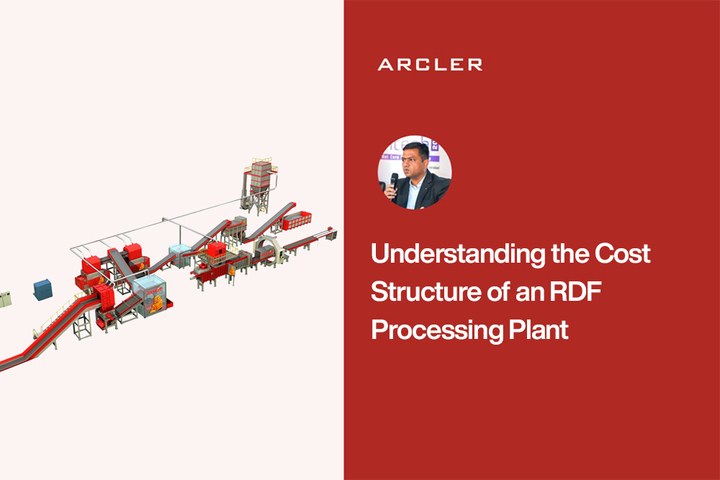
Understanding the Cost Structure of an RDF Processing Plant
Refuse Derived Fuel (RDF) has become a critical component of modern waste-to-energy strategies, especially for cement plants and industrial boilers seeking alternatives to fossil fuels. With rising landfill pressure, stricter environmental norms, and growing fuel costs, RDF processing plants are increasingly being adopted across India and other developing markets.
However, for project owners, municipalities, and industrial operators, one key question remains: Where does the money go in an RDF plant project?
Understanding the cost structure of an RDF processing plant is essential for long-term operational success and financial viability.
This guide breaks down RDF plant costs into capital investment, operational expenses, and revenue drivers, helping stakeholders plan smarter projects.
Understanding the Cost Structure of an RDF Processing Plant
An RDF plant converts municipal solid waste and industrial combustible waste into a consistent alternative fuel suitable for cement kilns and power plants. The overall project cost depends on multiple factors, including plant capacity, automation level, waste quality, land availability, and regulatory requirements.
Broadly, RDF plant costs are divided into:
- Capital Expenditure (CAPEX) – one-time setup costs
- Operational Expenditure (OPEX) – recurring running costs
Capital Expenditure (CAPEX): Initial Project Investment
CAPEX usually accounts for the largest share of RDF plant investment, especially during the setup phase.
Key CAPEX Components
| Cost Component | Typical Share |
| Processing Equipment | 40–55% |
| Civil Works & Buildings | 15–25% |
| Environmental Systems | 10–20% |
| Electrical & Automation | 8–12% |
| Engineering, Permits & Installation | 5–10% |
Core Equipment Costs
Processing equipment forms the backbone of an RDF plant and includes:
- Primary and secondary shredders
- Screening systems (trommel, disc, or vibrating screens)
- Magnetic and non-ferrous metal separators
- Air density or ballistic separators
- Fine shredders for RDF size consistency
Plant capacity directly impacts cost. For example:
- 100–300 TPD RDF plants typically require moderate automation and compact layouts.
- Higher-capacity plants demand advanced automation, higher redundancy, and larger footprints.
Regional Cost Variation
In India and Southeast Asia, RDF plant CAPEX is generally 30–40% lower than in Europe or North America due to:
- Lower construction and labor costs
- Flexible land availability
- Simplified initial permitting
Compact plant layouts and integrated processing lines further help reduce land development and civil costs, which is a major advantage in urban and industrial zones.
Operational Expenditure (OPEX): Day-to-Day Running Costs
Once operational, an RDF processing plant incurs continuous costs linked to energy use, manpower, maintenance, and logistics.
Typical OPEX Distribution
| OPEX Element | Share of Total |
| Energy Consumption | 30–40% |
| Labor & Operations | 20–30% |
| Maintenance & Consumables | 10–20% |
| Waste Transport & Handling | 5–10% |
| Administration & Compliance | 5–8% |
Energy Costs
Energy is the largest operational expense in RDF plants. Shredding, screening, drying, and conveying systems together consume significant power.
- Average energy consumption ranges between 50–150 kWh per ton, depending on RDF size and moisture levels.
- Efficient equipment selection and optimized process flow play a crucial role in reducing energy costs over time.
Labor & Automation
Labor costs depend more on automation level than geography.
- Highly automated RDF plants operate efficiently with smaller teams.
- Semi-automated plants may rely on additional manpower for sorting and feeding, but still remain cost-effective in India due to lower wage structures.
Balanced automation ensures consistent RDF quality while keeping operating costs under control.
Maintenance & Wear Parts
Regular maintenance is essential due to abrasive waste materials.
- Wear parts such as shredder blades, screens, and conveyor components require periodic replacement.
- Durable machine design and preventive maintenance programs can reduce downtime and extend equipment life, lowering total ownership cost.
Feedstock Economics: Cost or Revenue?
Feedstock economics vary significantly by region.
- In India, RDF plants often receive waste through municipal partnerships or landfill mining projects, with minimal or zero feedstock cost.
- In some regions, gate fees may apply for processing municipal or commercial waste, turning waste intake into a revenue stream.
Long-term feedstock agreements are critical to ensuring stable plant operations.
Revenue Streams & Profitability
RDF plant revenue is primarily driven by:
- Sale of RDF to cement plants and power producers
- Tipping or processing fees (where applicable)
- Recovery of recyclables such as metals
RDF Market Pricing
RDF prices typically range based on:
- Calorific value
- Moisture content
- Particle size consistency
High-quality RDF with uniform size and low contamination commands better pricing and ensures long-term offtake agreements with cement manufacturers.
What Determines RDF Plant Success?
Profitability depends on lowering total cost of ownership (TCO) while maintaining consistent RDF quality.
Key success factors include:
- Right equipment configuration for local waste characteristics
- Energy-efficient plant design
- Scalable automation
- Reliable after-installation support
- Long-term fuel offtake partnerships
Well-designed RDF processing plants can reduce per-ton production costs significantly while supporting sustainable waste management goals.
Arcler’s Approach to RDF Processing Projects
At Arcler Projects, we design RDF processing plants that balance technical efficiency, operational reliability, and long-term economics.
Our solutions focus on:
- Customized plant layouts based on waste audits
- Integrated shredding, screening, and separation systems
- Energy-optimized process flow
- Scalable designs for future capacity expansion
- End-to-end execution from design to commissioning
By aligning technology selection with real-world waste conditions, we help clients build RDF facilities that are economically viable, compliant, and future-ready.
Final Thought
An RDF plant is not just an equipment investment, it is a long-term infrastructure asset. Understanding where the money goes helps stakeholders make informed decisions that maximize returns while supporting circular economy and alternative fuel adoption.
Planning an RDF processing plant? Talk to Arcler’s experts for a customized solution.
FAQ’s
1. What part of the RDF cost structure can be changed most easily?
Energy consumption and machine maintenance are often the easiest areas to reduce with better equipment.
2. How does modern technology help reduce RDF plant costs?
It reduces electricity use, space needs, blade replacements, and labor, lowering both setup cost and daily running costs.
3. Why is space important in RDF plants?
Smaller plant layouts cost less in rent and construction, reducing overall investment.
4. Can new technology improve RDF quality too?
Yes, better machines also deliver more consistent RDF particle sizes with fewer impurities.5. Is reducing operating cost more important than reducing setup cost?
Both matter, but cutting long-term operating costs often has the biggest impact on final profitability.


