Vibrating Screen

Vibrating Screen

Vibrating Screen Machine

Vibrating Screen

What is a Vibrating Screen?

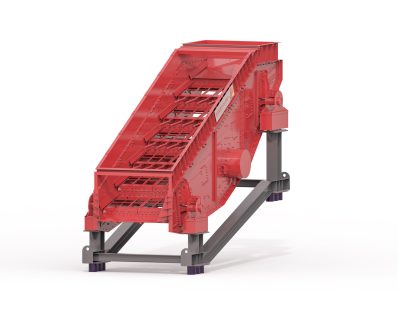
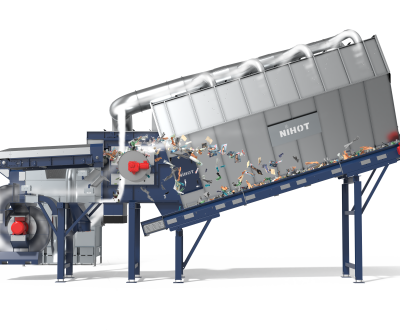
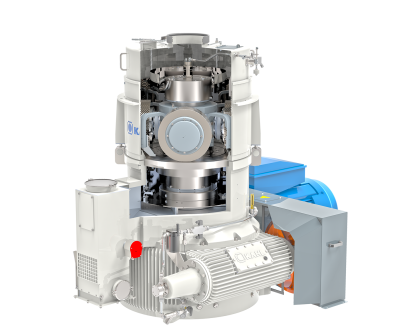
A Vibrating Screen, also called a waste screen, is one of the most widely used screening technologies in waste management and recycling. Built for continuous and high-capacity separation, it uses a vibrating drive system to classify waste by size and fraction.

Our designed vibrating screen machines are available in single-deck or double-deck models. The upper deck features louver-type panels arranged in cascade with additional grate bars, while the lower deck uses flip-flop polyurethane panels for efficient separation of finer materials.

This design ensures reliable operation across municipal solid waste (MSW), RDF pre-processing, and industrial recycling plants, where high efficiency and durability are essential.

Vibrating Screen

Working Principle of Vibrating Screen

The vibrating screen working principle is based on oscillating motion generated by an unbalanced shaft drive
Waste material is fed onto the vibrating deck.
Vibration moves the material forward while stratifying it across the screen surface.
Smaller fractions fall through the openings, while oversized items are discharged at the end.
In double-deck models, the first deck removes larger pieces, and the second flip-flop polyurethane deck handles finer particles.

This method ensures accurate separation, minimal clogging, and consistent screening quality, even for challenging waste streams.

Brochure

Please enter your email ID to get brochure via email

    Email :
    Product Brochure :

    Applications of Screen

    Vibrating screen machines are highly versatile and can be applied to a wide range of waste and recycling operations:
    Municipal Solid Waste
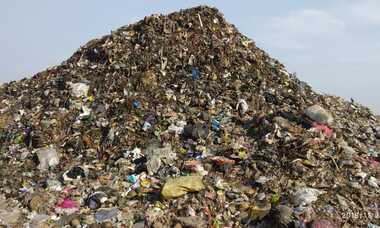
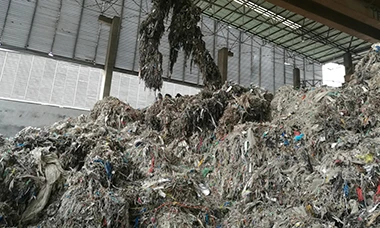
    Municipal Solid Waste (MSW) – separating fines and recyclables
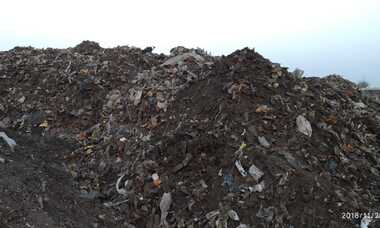
    legacy-waste
    Refuse-Derived Fuel (RDF) – preparing clean feedstock for alternative fuels
    Industrial Waste
    Compost & Green Waste – screening organic fractions for composting
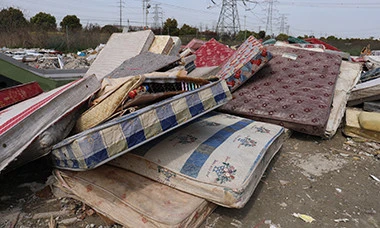
    Bulky Waste
    Construction & Demolition Waste (C&D) – separating soil, stones, and recyclables
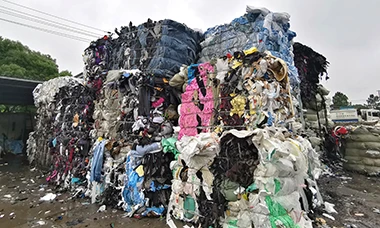
    Papermill Waste
    Plastic, Glass, and Wood Recycling – classification of secondary raw materials
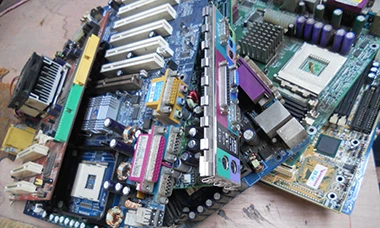
    Electronic Waste
    Industrial Waste – handling mixed solid waste and feedstock materials

    Technical Overview of Vibrating Screen

    Parameter Details
    Design Type Single or Double Deck
    Drive Type Unbalanced shaft with V-belt drive
    Upper Deck Louver-type panels in cascade arrangement with grate bars
    Lower Deck Flip-Flop polyurethane panels
    Capacity Up to 300 m³/h
    Cut Points 20 – 400 mm
    Features Isolating frame, motor starter with DC brake, oil bath lubrication
    Vibrating Screen

    Key Features & Advantages

    High Throughput – Processes up to 300 m³/h of waste.
    Versatile Configurations – Single or double-deck design options.
    Low Maintenance – Robust construction with oil bath lubrication.
    Clog-Free Operation – Flip-flop polyurethane deck ensures screening efficiency.
    Reduced Vibrations – Isolating frame minimizes dynamic forces on foundations.
    Precise Separation – Adjustable cut points from 20 mm to 400 mm.
    Advanced Controls – Equipped with DC brake starter unit for operational safety.
    Recycling Plant

    Ready to Maximize Your Screening Efficiency?

    We deliver reliable Vibrating Screens, high-capacity performance for waste and recycling facilities. Let us help you integrate the right solution into your processing line.

    Frequently Asked Questions

    What is a vibrating screen used for?
    It is used to classify waste by particle size, separating fine, medium, and oversized fractions in recycling plants.
    What is the difference between single-deck and double-deck screens?
    Can vibrating screens handle municipal solid waste?
    How do vibrating screens prevent clogging?
    What is the capacity of Arcler’s vibrating screen machines?

    Cutting-Edge Waste Recycling Products and Machines