
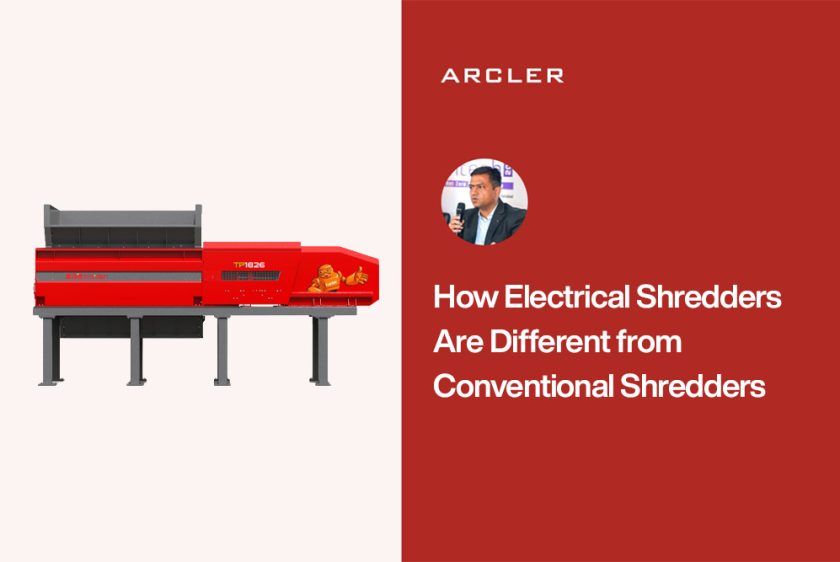
How Electrical Shredders Are Different from Conventional Shredders
How Electrical Shredders Are Different from Conventional Shredders
As waste management plants evolve, efficiency, energy savings, and uptime have become non-negotiable. Across the globe, operators are moving away from traditional hydraulic systems toward high-efficiency electric shredders.
Responding to this shift, HARDEN has launched its new patented E-Drive Shredder, a high-torque, electrically driven solution designed for large-capacity coarse shredding with significantly lower operating costs.
What Is the Electrical Drive Shredder?
The Primary E-Drive Shredder is a next generation coarse shredder built for handling tough, bulky, and mixed waste streams. It is specifically designed for high-throughput waste processing plants where energy efficiency and reliability are critical.
Typical Output:
- Coarse shredding: 80–300 mm
- High uniformity for downstream processing
Materials It Can Process:
- Municipal Solid Waste (MSW)
- Cement Waste
- Commercial & bulky waste
- Biomass waste
- Renovation & demolition waste
- End-of-life vehicles
- E-waste
- Scrap aluminum
This makes it ideal for AFR, RDF, MSW, and large recycling facilities.
The Real Problem with Hydraulic Shredders
Hydraulic shredders have served the industry for decades, but they come with limitations that are becoming harder to ignore:
- High power losses due to hydraulic transmission
- Complex systems with pumps, oil circuits, and cooling units
- Frequent maintenance and higher downtime
- Rising annual operating costs
For large AFR, RDF, MSW, plastic, and bulky waste plants, these inefficiencies directly impact profitability.
Why Electric Shredders Are the New Global Trend
Traditional hydraulic shredders have dominated the market for years, but they come with higher energy loss, complex maintenance, and rising operating costs.
The new E-Drive technology changes that completely.
Key Industry Shift:
- Fewer hydraulic components
- Direct motor drive
- Intelligent energy recovery
- Lower maintenance dependency
Electrical Shredder Vs Hydraulic Shredder
| Parameter | E-Drive Shredder | Hydraulic Shredder |
| Power Consumption | Up to 30% lower | Higher energy loss |
| Capital Cost (CAPEX) | ~15% lower | Higher system cost |
| Annual Maintenance Cost | ~40% lower | Frequent hydraulic servicing |
| Drive Efficiency | Direct electric drive | Hydraulic power loss |
| Control Precision | Program-based | Mechanical dependency |
Cutting System Designed for Real-World Waste
The E-Shredder uses a hook-type cutting system that works on both tearing and shearing principles.
Why This Matters:
- Large hook knives improve material grip
- Bi-directional shaft rotation prevents wrapping and jamming
- Works efficiently on flexible, bulky, and rigid materials
- High-alloy steel knives offer long service life
Both rotor and stator knives can be repaired or replaced with minimal downtime, further improving plant availability.
Intelligent Drive & Energy Recovery
The electrical shredder is not just powerful, it’s intelligent.
Drive Options:
- High-torque electric motors for heavy-duty applications
- PMSM (Permanent Magnet Synchronous Motors) for optimized efficiency
Energy Recovery Advantage:
- Kinetic energy generated during braking is recovered
- Energy is reused to support reverse rotation
- Results in significant real-world energy savings
This intelligent control system helps plants maintain consistent output while keeping energy consumption in check.
Conclusion: A Smarter Investment for Modern Plants
The shift toward electrical shredders is not just a trend, it’s a response to real operational challenges.
With:
- 30% power savings
- 15% lower capital cost
- 40% reduction in annual maintenance
The Electrical Shredder delivers value where it matters most energy efficiency, reliability, and lifecycle cost.


