

Chemical Recycling of Plastics: Shaping Tomorrow’s Circular Economy
As global plastic consumption continues to rise, so does the challenge of dealing with the millions of tonnes of plastic waste generated each year.
Despite the progress in mechanical recycling, a large portion of plastic still ends up in landfills or incineration plants primarily because it’s too contaminated, too complex, or too mixed to recycle conventionally.
To truly close the loop on plastic waste, innovation beyond traditional methods is needed. That’s where chemical recycling, also known as advanced recycling, is transforming the landscape.
Why We Need Innovation Beyond Mechanical Recycling
Mechanical recycling shredding, washing, and reprocessing plastics has been the backbone of recycling systems for decades. It works well for clean, single-type plastics like PET bottles or HDPE containers.
However, when it comes to multi-layer films, colored plastics, or contaminated packaging, mechanical methods struggle. These materials degrade in quality with each cycle and can’t be used to create food-grade plastics.
That’s why chemical recycling is emerging as a game-changer offering a way to turn plastic waste back into its original molecular form, producing virgin-quality materials ready for reuse.

Technology Focus: How Chemical Recycling Works
Chemical recycling isn’t one single process; it’s an umbrella term for technologies that break down polymers into monomers or fuels through controlled chemical or thermal reactions.
Here are the key methods driving this revolution:
| Technology | Process Description | End Product | Suitable Plastics |
| Pyrolysis | Heating plastics in the absence of oxygen | Synthetic oil or fuel | Mixed polyolefins (PE, PP) |
| Depolymerization | Breaking polymers into monomers using heat or catalysts | Monomers for new polymer production | PET, Nylon, Polystyrene |
| Solvolysis | Using solvents under pressure to dissolve and recover polymers | Reusable monomers or additives | PET, Polyurethanes |
| Gasification | High-temperature conversion of plastics into syngas | Hydrogen, syngas for energy or chemicals | Mixed & contaminated plastics |
Unlike mechanical recycling, which melts and reforms plastics, chemical recycling restores plastics at the molecular level, ensuring no loss in quality.
Did You Know?
By 2030, global demand for recycled plastics is projected to triple, driven by packaging and manufacturing industries.
Chemical recycling bridges the gap, turning hard-to-recycle plastics into high-quality raw materials, fueling a truly circular economy.
Opportunities: Turning Plastic Waste into Resources
Chemical recycling opens doors to new industrial opportunities that extend beyond conventional waste treatment.
a. Processing Mixed & Contaminated Plastics
Traditional recycling requires sorted and clean plastics. Chemical recycling, however, can handle films, laminates, labels, and colored plastics that would otherwise be landfilled or burned.
b. Producing Virgin-Grade Polymers
By breaking down plastics into monomers or base chemicals, these technologies can regenerate plastics of the same quality as virgin resin — suitable for food-contact or high-performance applications.
c. Supporting Energy Recovery & Circular Economy Goals
Processes like pyrolysis can create plastic-to-fuel outputs such as synthetic oil or syngas, supporting industries in energy transition and waste-to-value initiatives.
d. Industrial Integration Potential
Chemical recycling can work alongside existing mechanical recycling systems, maximizing recovery and ensuring no plastic goes unused.
Integration Insight: Combining Mechanical & Chemical Recycling
The future of plastic recovery lies in integration, not replacement.
While mechanical recycling remains efficient for clean and sorted materials, chemical recycling complements it by treating what’s left behind — the mixed, complex, or degraded plastics.
An Integrated Plastic Recovery Model Looks Like This:
Sorting → Washing → Mechanical Recycling (PET, HDPE, PP) → Chemical Recycling (Mixed Plastics, Films, Contaminants) → Reuse / RDF / Fuel

| Stage | Technology Used | Output |
| Primary Sorting | Optical / Flake Sorters | Polymer-separated streams |
| Mechanical Recycling | Washing, Extrusion | Recycled granules |
| Chemical Recycling | Pyrolysis, Depolymerization | Monomers, fuel, feedstock |
| Integration Result | Closed-loop recovery | Reduced waste, circular materials |
By merging these systems, Arcler helps recycling plants evolve into integrated resource recovery facilities, capable of handling diverse plastic streams efficiently.
Arcler’s Vision: Building the Future of Circular Recycling
At Arcler, we believe the future of recycling is hybrid where mechanical precision meets chemical innovation.
Our role as a technology integrator allows us to design and deliver end-to-end systems that include:
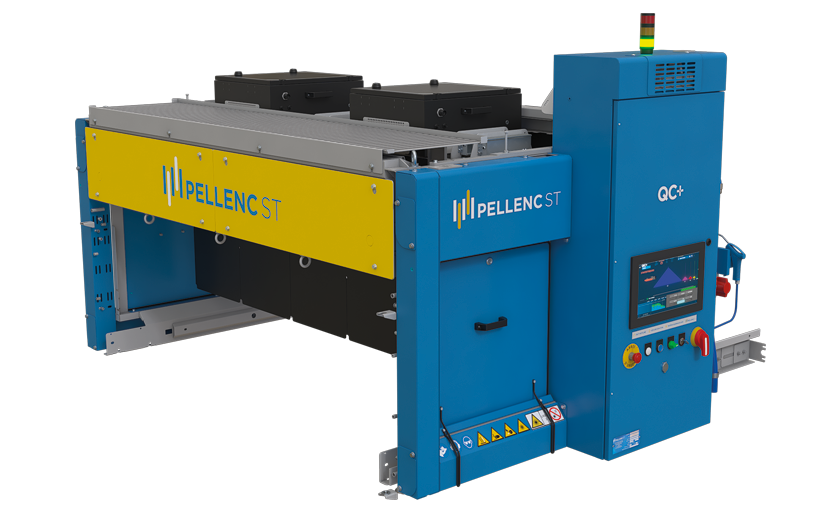
- Optical & flake sorting systems for precise feedstock preparation.
- Mechanical recycling lines for PET and polyolefins.
- Chemical recycling integration for complex and residual plastic streams.
- Automation & digital monitoring for optimized process control.
By connecting these technologies under one ecosystem, Arcler enables recycling facilities to:
- Increase plastic recovery rates.
- Produce high-quality, reusable polymers.
- Support RDF and AFR preparation for energy recovery.
- Contribute directly to national and global circular economy goals.
Conclusion
Chemical recycling represents the next major step in our transition from a linear to a circular economy. It offers the promise of turning complex plastic waste into valuable resources while complementing mechanical recycling systems already in place.
At Arcler, we’re helping industries bridge the gap integrating advanced recycling technologies into smart, efficient, and future-ready waste management plants.Because the future of recycling isn’t just about recovering plastic it’s about redefining it.


